Two hours of simulated Chladni patterns, drawn by code not filmed
Eidophone publishes a long-form ambient loop of plate patterns and is unusually straight about the fact that none of it is a real plate.
youtube.com ↗120 min
Eidophone publishes a long-form ambient loop of plate patterns and is unusually straight about the fact that none of it is a real plate.
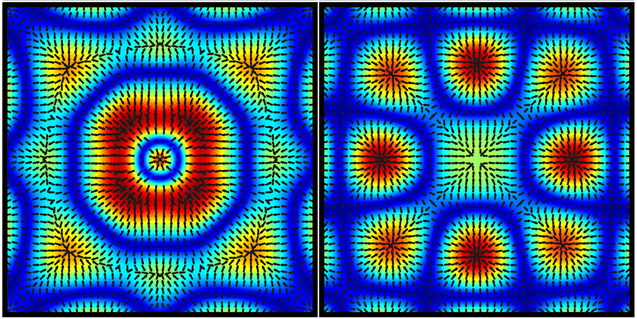
A WebGPU simulator that uses Kirchhoff–Love plate theory and real material constants instead of the usual closed-form shortcut.
Olivier Giulieri's MIT-licensed demo computes square-plate trigonometry and circular Bessel functions, with no libraries at all.
Real-time visuals with sliders for particle count, force and trail opacity — and its author's own honest label.
An hour-plus classroom lecture that treats all three as applications of the same standing-wave physics, with board work and demonstrations.
Wikipedia's concert pitch article traces the tuning to the Schiller Institute and scientific pitch, and is blunt about the health claims.
A web, Electron and Metal screensaver project that builds nodal structures live from spectrum and energy rather than replaying animation.
Apache-licensed, cross-platform DMX software with MIDI, OSC and Art-Net in, so audio and light can share a clock.
A serviceable orientation to the field that credits Hooke, Chladni, Faraday and Jenny — and sits in the pseudoscience category.
A June 2026 thread where the honest answer to the equipment question turns out to be a single speaker.
Beer sings inside a prehistoric painted cave and lets the resulting vibrations arrange pigment into permanent patterns.
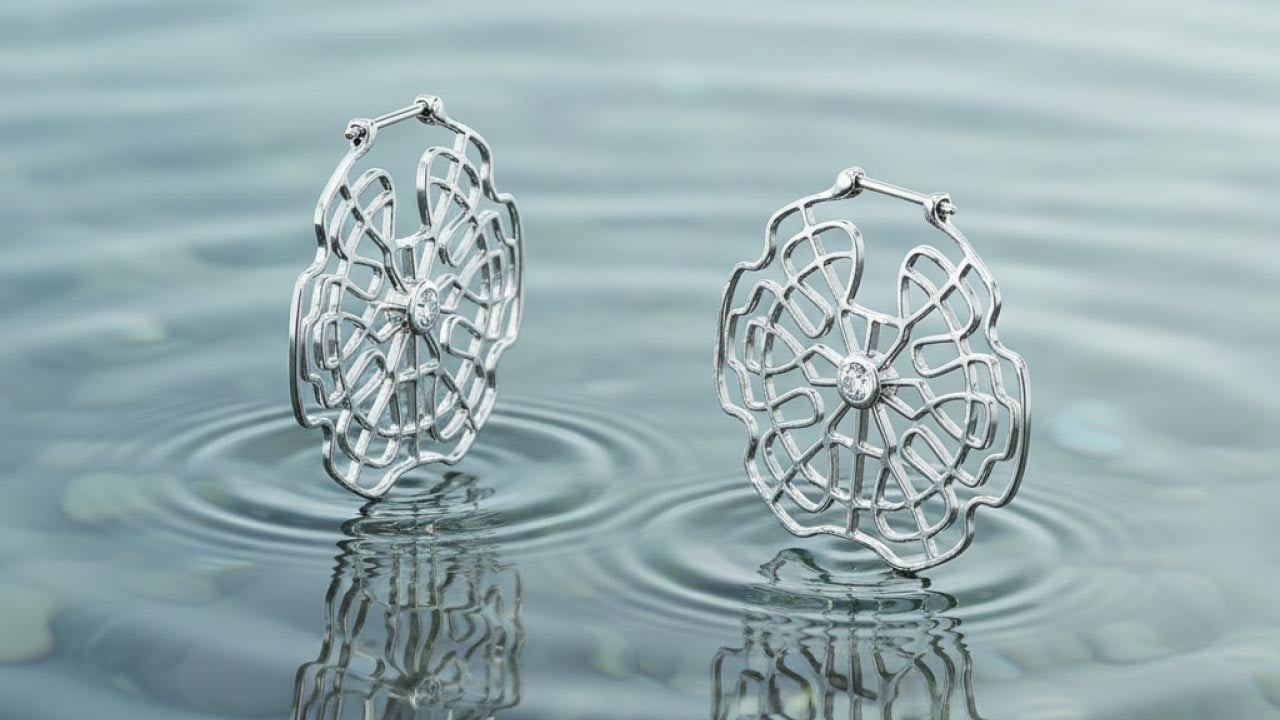
Ruveil maps sound frequencies with software and casts the resulting geometry in precious metal, framed in the language of energetic resonance.
STEM NOLA films a ninth-grade student demonstrating the simplest tonoscope there is, on a New Orleans television slot.
A preprint that classifies plate patterns with a small neural network and maps them back to frequencies in Max/MSP.
A well-shot 32-minute essay that moves from plate patterns to ancient architecture and then to assertions about DNA that acoustics does not support.
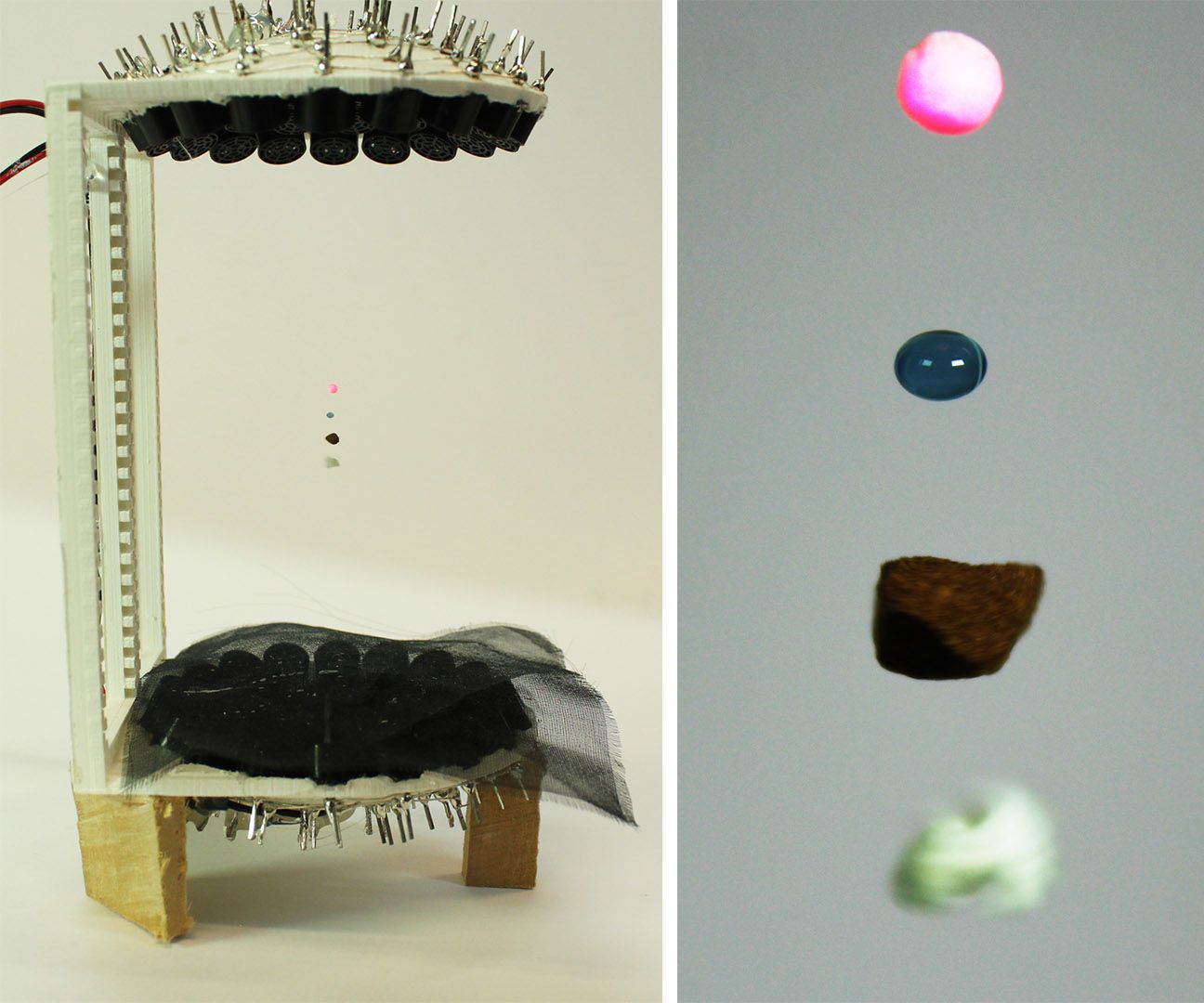
Not the usual standing-wave levitator: this one holds objects on a thin cushion of air pumped by an ultrasonically vibrating surface.
Elie Naulleau demos a set of FFGL plugins that generate rectangular, circular, polygonal and nested plate modes with the mode numbers exposed as controls.
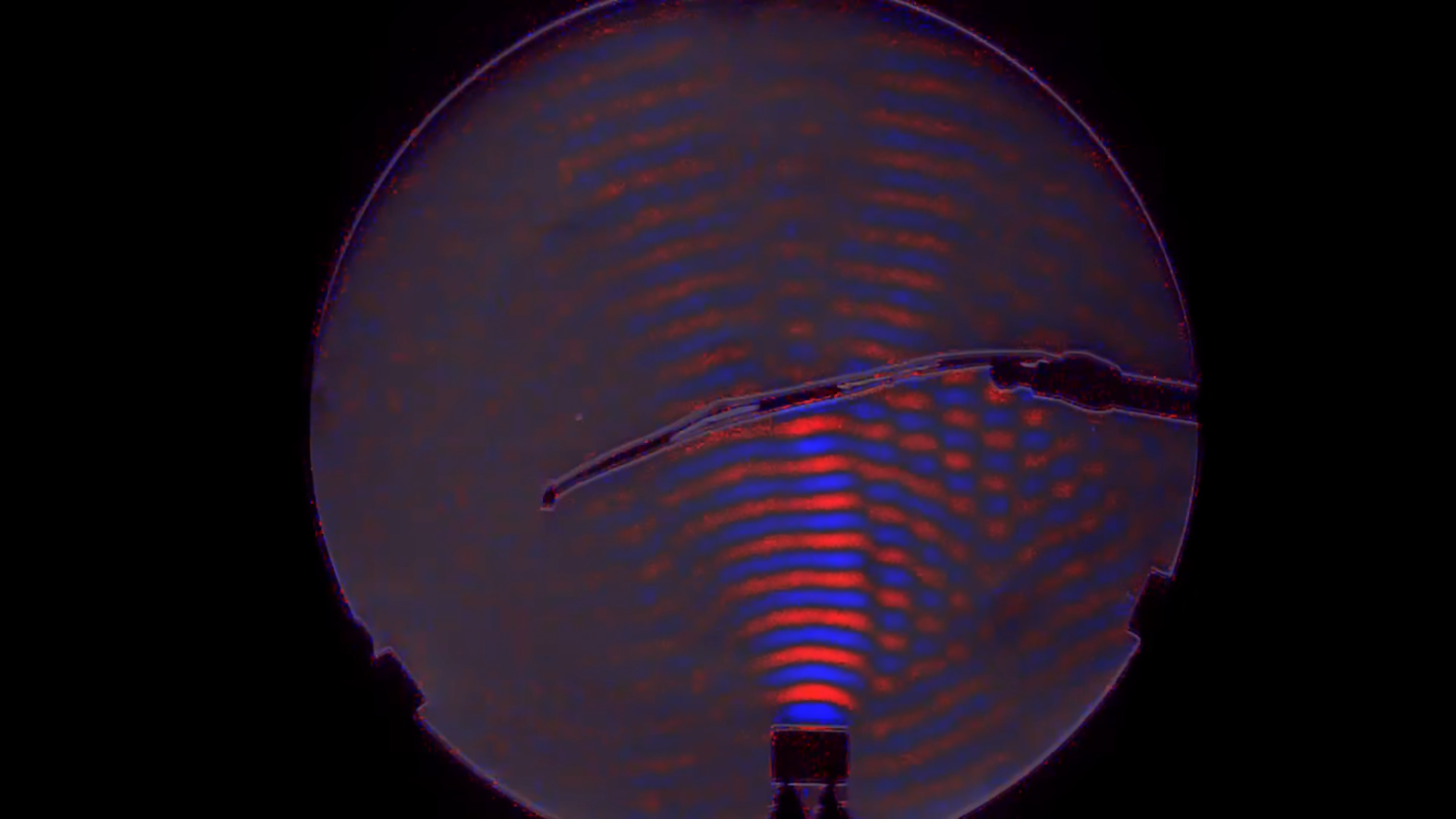
PlasmatronX combines Schlieren optics, a rotating turntable and medical imaging code to reconstruct an ultrasonic levitator's pressure field as a 3D volume.
A short biography of the Swiss physician who coined cymatics, built the tonoscope, and left two volumes of photographs behind him.
Founded in March 2026 after the older subreddit was lost to sample packs, and posting real rigs most weeks.
Ultrasonic vibration of an electrolysis cathode moves gas bubbles into modal patterns and cuts overvoltage by a fifth.
STEAM Powered Family's short classroom build strips the experiment down to the minimum kit that still produces clean nodal lines.
Wikipedia's Faraday wave entry explains the subharmonic response that catches out anyone driving a vessel with a speaker.
A guitar-making Q&A episode that treats plate modes as a practical way to judge a soundboard, not as a spectacle.
Koolertron's dual-channel DDS generator gives you fine frequency control and a second phase-locked channel for strobe work.
Marina Hugues photographs acoustic vibration in French, and offers one-to-one sessions as a music therapist.
$16.95, 65.5 mm across, one data pin, and the timing caveat that decides which controller you can use.
The commercial instrument that produces the water-surface images you have probably already seen, and the claims made around it.
The Instagram feed for SoundScribe, a wireless Chladni plate kit, run by the people who make it.
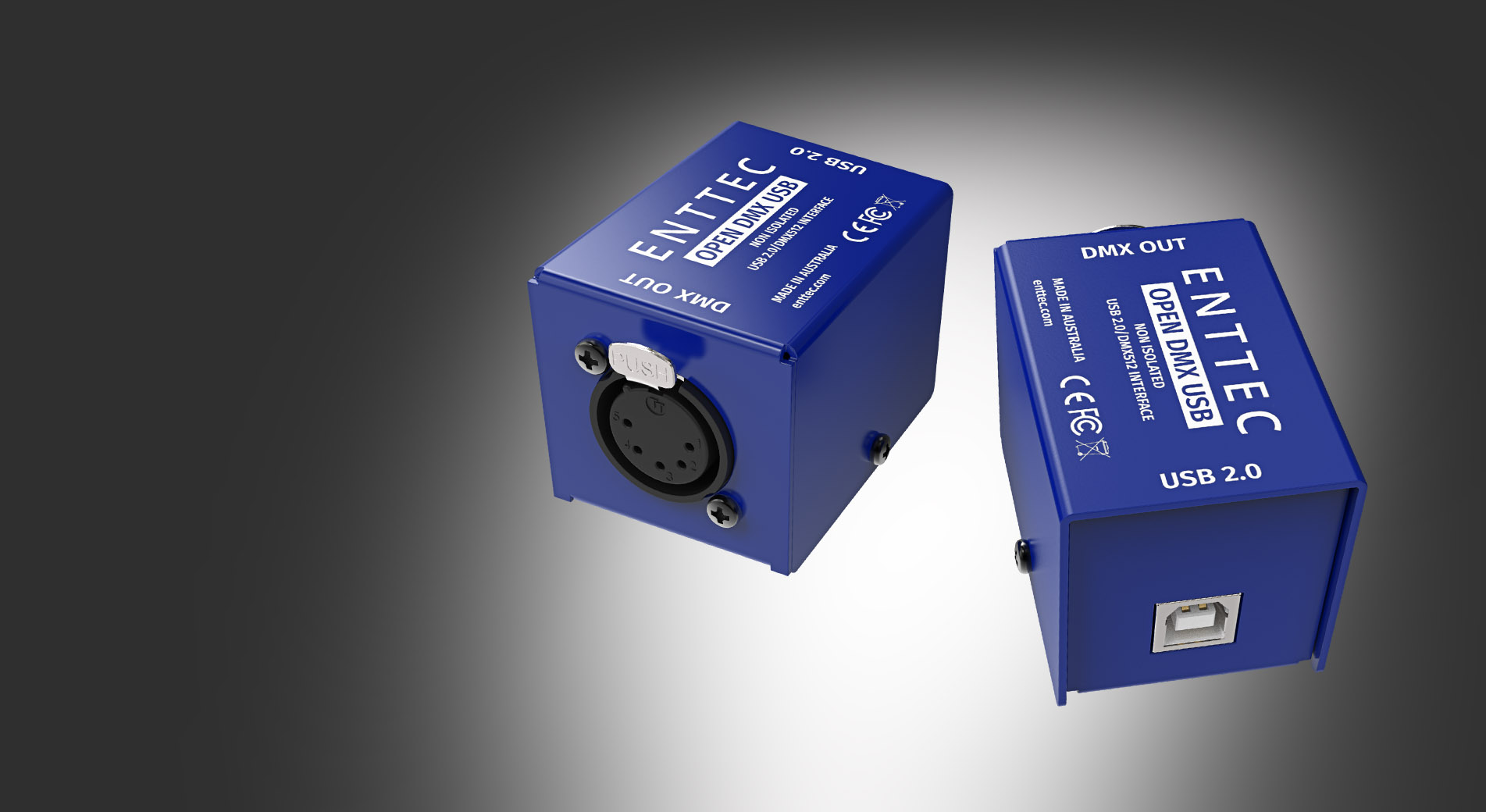
The cheapest sane way to get one DMX universe out of a laptop, provided you know what it leaves out.
296,000 people follow this water-and-light feed, and the bio's main call to action is a paid Cymatics 101 course.
A German art project turning water cymatics into a catalogue of prints, albums and 4K films, with prices from €9 to €1,200.
A German art collective posting cymatic water installations and live shows to 33,000 Instagram followers.
The commercial shape of a cymatics art practice, laid out on one German-language website.
A photographer's own galleries cover cymatics, ferrofluid and interference patterns; his Instagram has one post.
The man behind the most-watched cymatics video keeps one live account, and it is not the one you would guess.
KYMAT has 1,796 followers there and Cymatics Lab has 67, on the platform that ought to suit the subject best.
A square plate, a round plate, fine sand and a shaker: the standard teaching-lab kit, sold without a listed price.
John Stuart Reid's own Instagram has 14 posts; the instrument's working feed is a different handle entirely.
The shop attached to CymaScope sells prints and voice imagery alongside sound-therapy PDFs, which tells you something about the audience.
The specification of the only consumer Chladni kit we could find, in full and with the gaps noted.
The science YouTuber's live handles are @stevemouldscience, @MouldS and @stevemould on TikTok — in that confusing order.
360,400 followers and 5.5 million likes on an account posting short-form physics demonstrations.
Alex, a self-described cymatics artist, sound technician and composer, posting steadily to a small audience.
Twenty-odd repositories in JavaScript, TypeScript, Python, C and Pascal, ranging from teaching toys to GPU solvers.
Faraday Waves is a band, @chladni is empty, and @cymatics belongs to an account with two posts.
PASCO's WA-9855 is the electromechanical shaker that actually vibrates a Chladni plate, and it needs a separate signal generator.
Derivative's real-time platform is the common tool behind audio-reactive installation work, and its own curriculum is free to read.
A home-built rig that photographs pressure waves in air by syncing an overvolted LED flash to the audio.
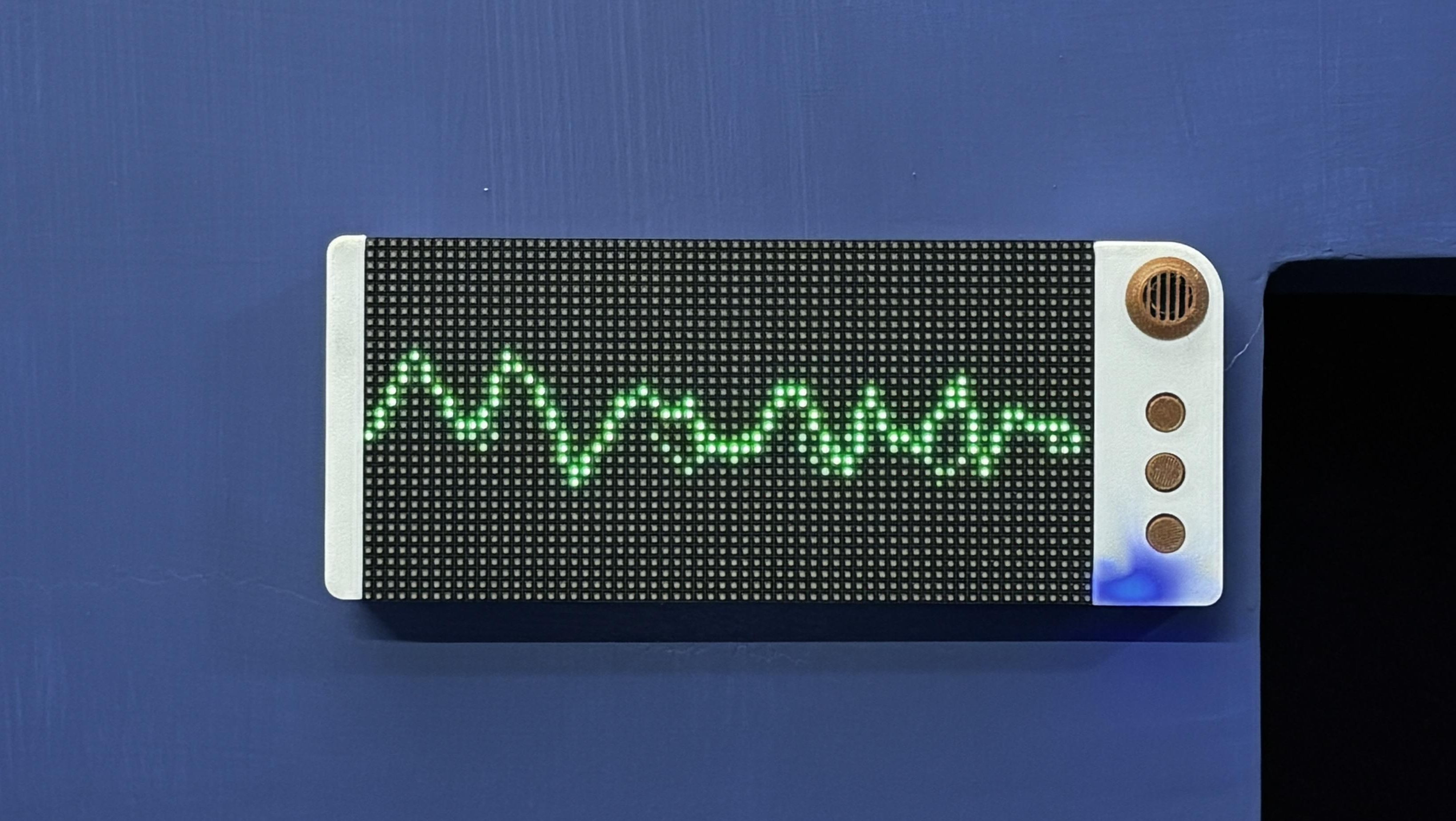
Raspberry Pi Pico 2, a microphone with automatic gain control, and a 64 by 32 HUB75 panel in a printed case.
An 80-minute interview with John Stuart Reid that is worth hearing precisely because of where it overreaches.
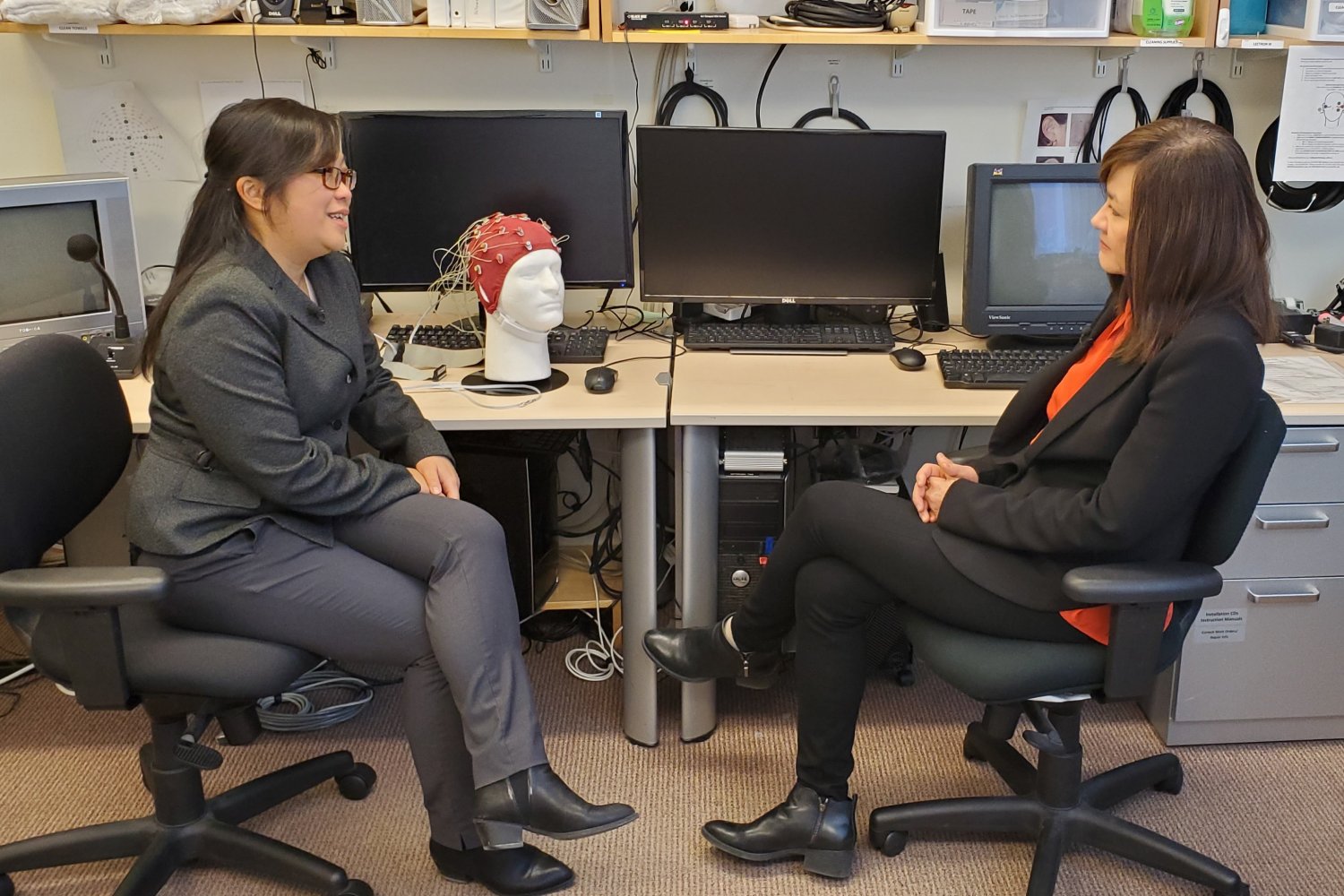
A small MIT follow-up tracks volunteers who kept using daily audiovisual stimulation after their trial ended.
Lucas Thompson on Victorian acoustics primers that told middle-class families to bow a sand-covered plate at home.
Science Buddies spends thirty-three minutes on the electronics most levitator videos skip, including why driving transducers straight off Arduino pins is not enough.
A £12.99 iPad app that renders sound as animated CymaGlyphs, with a 432 Hz comparison feature we would treat carefully.
A Reddit thread on the cheapest working setup there is, and why its patterns keep changing.
Promethean compresses the plate build to a vertical short, which turns out to be about the right length for it.
Park and Tsai's PLOS Biology essay gathers the animal and human evidence for gamma sensory stimulation in one place.
Forty-three cancer patients, a body monochord, and a randomised cross-over design that treats the tuning claim seriously.
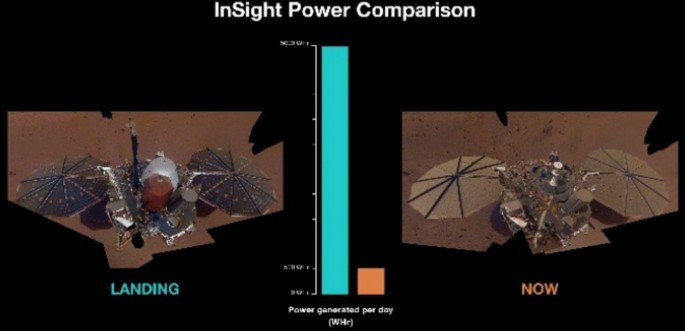
Vibrating a solar panel at the right sequence of frequencies moves Martian dust off it, without moving parts touching the surface.
A 2025 Scientific Reports paper vibrates panels through a sequence of resonances to shift accumulated dust, and measures the power recovered.
Leo Kourim compiles every clip from a school tonoscope project into one fast-running fourteen minutes.
A 2024 high-speed look at resonance on strings that shows the transient most demos skip.
Zulu Cymatics stretches a soap film over a speaker and lights it from overhead with one coloured ring and one white, which is what makes the pattern readable.
Related rather than strictly cymatic: Electronoobs builds a Bluetooth speaker whose magnetic fluid moves with the music, and gives away the design.
A BBC segment that frames the Chladni plate as a way of reading an object's own resonances rather than the sound played at it.
Factory Settings walks through driving a particle system with the Chladni equation and live audio, start to finish.
The German channel stoppi runs a plate from a speaker and a home-built amplifier, with the full circuit documented on his own site.
Benn Jordan follows the 432 Hz story back through its citations and finds the trail leads somewhere unpleasant.
A peer-reviewed argument that the eidophone belongs in art history, not just in the history of acoustics.
Steve Mould noticed the Rings of Power opening looked like Chladni figures, then built a plate to reproduce the shots.
Mr. E-Scholar builds a laser-and-mirror rig step by step, then proposes a rule about when two-tone figures stand still.
Resonant Devices walks through the key steps of a home cymatics rig and puts the materials list and sourcing links on their site.
Sven Meyer's KYMAT studio films a water-sound installation straight through, with no animation and no cuts to hide behind.
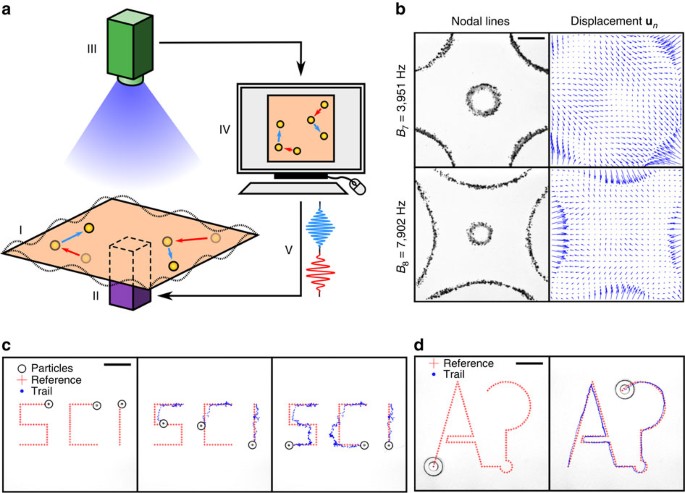
A closed-loop system that nudges hundreds of solder balls into arbitrary shapes using nothing but plate vibration.
Shawn Picarsic adapts two cheap waterproof speakers into working water cymatics devices with almost no fabrication.
RyanMake swaps sand for a non-Newtonian cornflour mixture to see whether plate patterns can be pushed into sculpture.
A useful timeline of visible-sound experiments, wrapped in claims that go well past what the physics supports.
A seven-minute dramatised piece from the MIT School of Science recreating the early flicker experiments in Li-Huei Tsai's lab.
Southampton's Institute of Sound and Vibration Research puts out a home tonoscope build and asks viewers to send back their results.
r/Cymatics still carries the title Physical Manifestations of Sound, and has not seen a cymatics post since 2020.
A German-language television piece on the photographer whose book Wasser Klang Bilder defined the look of water cymatics.
A ten-minute clip from the 1989 Royal Institution Christmas Lectures, in which the plates are a stop on the way to explaining musical instruments.
Rob Mullender-Ross on Margaret Watts Hughes, the eidophone, and a set of images rediscovered after decades.
A small iOS and Mac app that draws Chladni figures from live audio input, with the mixed reviews you would expect at that price.
A four-minute institutional video on GENUS, the mouse studies behind the claim that 40 Hz stimulation affects Alzheimer's pathology.
Adam Neely takes the tuning systems that 432 Hz advocates propose and plays them, which turns out to be the decisive move.
An electronics channel treats the Chladni plate as a control problem rather than a demonstration, and mostly discovers why it is hard.
Physics World on inverse Chladni behaviour in liquid, where beads run to the antinodes and can be driven one at a time.
The maker of the SoundScribe Chladni kit has an X account, and almost nobody is reading it.
Reid's 2018 follow-up lecture makes claims about water memory and cell differentiation that the evidence does not support.
Lucio Paiva's 2018 demo is small, fast and readable, and explains its own optimisation tricks.
Destin Sandlin films a bullet's pressure waves with a mirror-based optical set-up, a different way of seeing sound.
The 2018 follow-up uses borrowed Hasselblad and Vision Research cameras and a much higher frame rate.
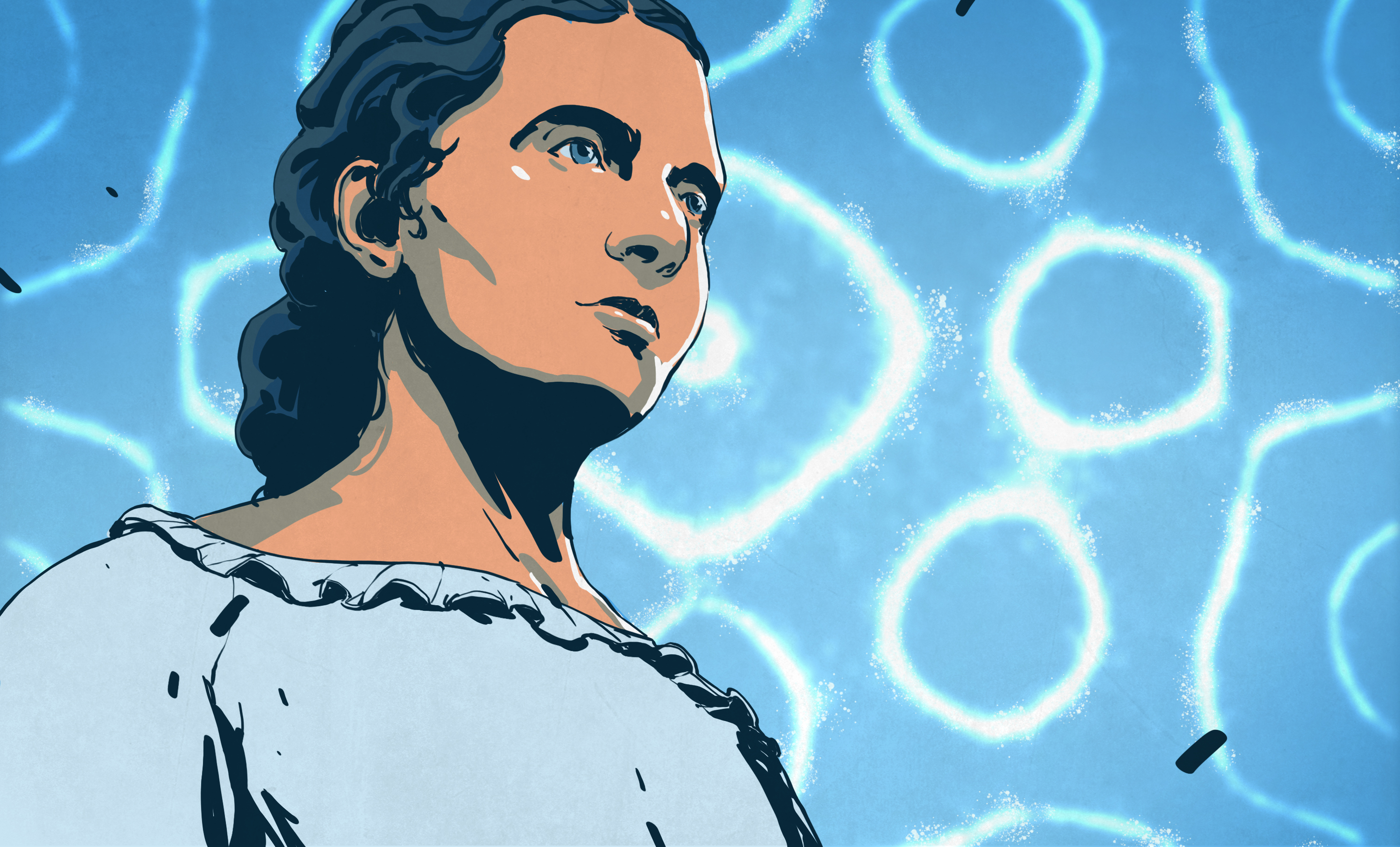
Hackaday's account of Sophie Germain, who spent eight years on the prize Napoleon set for explaining vibrating plates.
Quebec's Centre de démonstration en sciences physiques shows a simple voice-driven tonoscope in under three minutes.
A 32-minute research lecture on the fluid dynamics behind the patterns that appear on a vertically shaken liquid.
The instrument's own website links an X account that has 437 followers and zero posts since 2017.
A 27-step Instructables guide to a standing-wave levitator that holds water droplets and small components in mid-air.
Bruce Yeany bounces a laser off a mirror glued to a vibrating membrane, and separately turns a bucket lid into a Chladni surface.
Mould argues the usual textbook account of resonance is misleading, and uses a Rubens tube to make the case.
A physicist suspends a vertical soap film across the end of a tube, plays music down it, and films the colours reorganising.
A 32-minute talk from the 2016 Water Conference in Sofia by the inventor of the CymaScope, mixing instrument detail with large claims.
MIT's 2016 announcement: an hour of LEDs flickering at 40 Hz changed amyloid levels in mice engineered for Alzheimer's.
Sven Meyer and Kim Pörksen's interactive installation films a vibrating water container and projects the result.
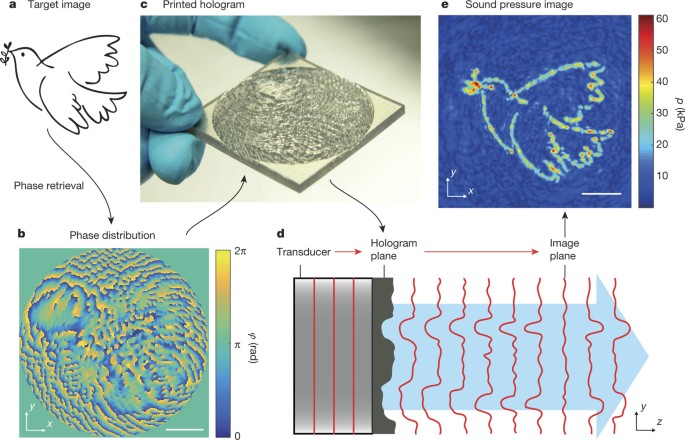
A 3D-printed plate that encodes an entire sound field, shaping ultrasound into arbitrary patterns and moving objects with it.
Aalto researchers show that particles wandering between the nodes of a Chladni plate are predictable enough to steer.
A short laboratory clip from the ENS showing the fluid instability that underlies every vibrating-liquid cymatics rig.
Bruce Yeany makes a mechanical driver out of a discarded speaker and cuts plates from sheet metal, replacing several hundred pounds of lab kit.
A four-minute explainer that treats Chladni figures as two-dimensional standing waves and shows why the grains move to the nodes.
Make: magazine's five-minute build guide, aimed at someone who has never driven a plate before.
A five-minute animated lesson by Oscar Fernando Perez on how a plucked string, its harmonics and the body make sound.
Destin Sandlin borrows a Phantom high-speed camera to look at what actually happens to a droplet held in an ultrasonic standing wave.
Cymatics.fm has 6,732 followers on X, 364,000 on Instagram, and has quietly taken over the word online.
The CymaScope channel's best-known clip, and a useful case study in separating good footage from overreaching claims.
A short companion clip that explains the speaker-and-plate set-up behind the sand patterns in CYMATICS.
Nigel Stanford's 2014 film pairs a track with real Chladni plates, a Rubens' tube, ferrofluid and a Tesla coil, and has been watched tens of millions of times.
Nigel Stanford's own page breaks his 2014 film into its experiments, and admits the music came last.
A short film from the Music + Math project with the Santa Fe Symphony, using the plate to tie vibrating strings to geometry.
Dianna Cowern's 2014 explainer treats the plate as one more standing-wave system alongside strings and glasses.
A two-dimensional Rubens' tube from Fysikshow Aarhus, with Derek Muller explaining what the flame heights show.
Gav and Dan's 2013 clip shows a cone's motion through paint, filmed on a Phantom Flex.
A 2013 Chladni plate sweep shot on PASCO lab gear that became one of the most-watched cymatics clips on YouTube.
The famous water-and-sound video is a camera effect: a hose vibrated at a speaker's frequency, filmed at 24 frames per second.
Archive footage of the Swiss doctor who coined the word cymatics, showing powders, pastes and liquids driven by sound.
206,000 followers, 11,999 posts, and a bio that now points at long COVID rather than physics videos.
A no-frills university demo with round, square and stadium-shaped plates, and notes on how touching the edge changes the mode.
Male alligators bellow at a frequency low enough to throw standing wave patterns off the water on their backs.
The short excerpt of the Swiss doctor's films that has done most of the work of introducing people to the term.
The 2009 TEDGlobal talk that introduced cymatics to a general audience, from the founder of the arts collective seeper.
A 2009 Nottingham physics demo that swaps the violin bow for an electronic driver and lets the professor explain.
A 2009 work in progress in which the composer uses her voice, not a signal generator, to find the modes of a plate.
30,704 followers, 4,360 posts, and a handle one letter away from a stranger's dormant account.
Vibrate a soap film in a frame and its normal modes reproduce the wavefunctions of quantum billiards, scars included.
Her 1891 Century Magazine article, in her own words: a rubber membrane, a wide-mouthed tube, and a singing voice.
The paper that gave us Faraday waves, inverse Chladni patterns, and an honest account of air currents over a vibrating plate.
The founding text of visible sound, free to read: 77 pages of German Fraktur and eleven engraved plates of figures.