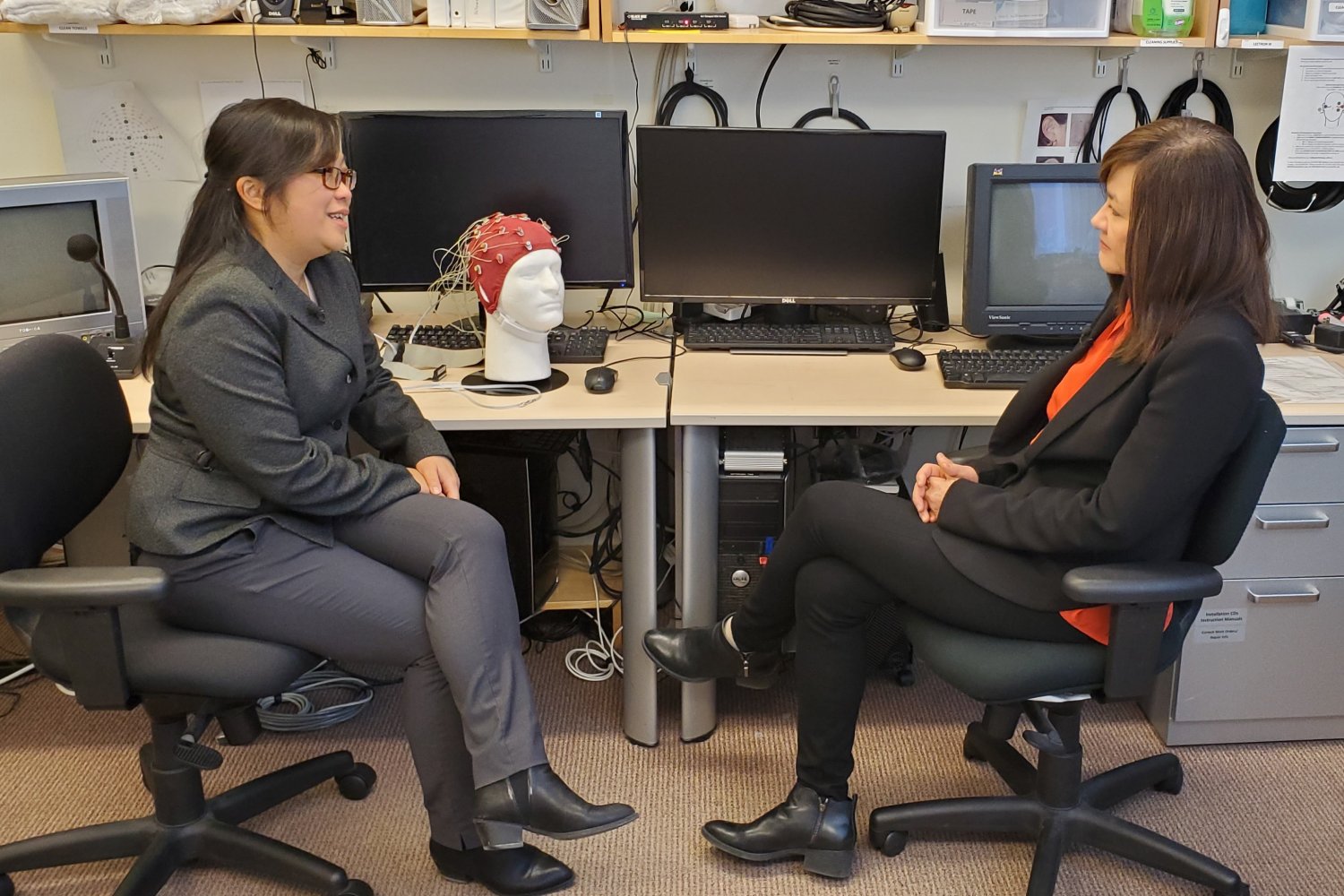
Reported in Alzheimer's & Dementia and summarised by David Orenstein, this study followed five volunteers who continued daily 40 Hz light and sound stimulation for about two years after an earlier early-stage clinical study. The team measured brain-wave response, MRI brain volume, sleep, five standard cognitive and behavioural tests, and plasma biomarkers in two participants.
Three women with late-onset Alzheimer's showed improved or slower cognitive decline compared with untreated controls drawn from national databases, and two showed reductions in phosphorylated tau of 47 per cent and 19.4 per cent. The two men with early-onset disease showed no significant cognitive improvement.
Five participants, no randomisation, historical comparison groups: the authors' own conclusion goes no further than "safe, feasible, and may slow cognitive decline". That is a reasonable thing to publish and a poor thing to quote in marketing copy for a light-and-sound device.