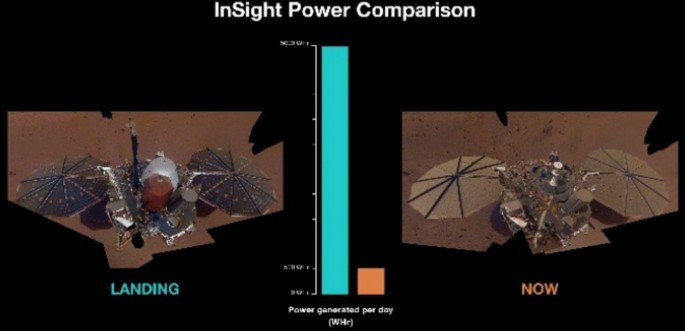
Dust accumulation is one of the standard ways a solar-powered rover dies. This Scientific Reports paper proposes driving the panel itself so that Chladni patterns form in the dust layer, then choosing frequencies that walk the particles off the panel rather than merely rearranging them.
The experimental work is about the choices that matter in any plate rig: which frequencies, in which order, and what plate geometry. The authors report identifying optimal frequencies, frequency sequences and plate shapes, and demonstrate dust removal in the lab.
Two things make it worth reading even if you have no interest in Mars. First, it is a clean example of the sequence being the mechanism — a single tone parks dust on nodal lines, a series of tones transports it. Second, it treats the panel as both the resonator and the thing being cleaned, which is a constraint any installation with a driven surface has to live with. Open access.